

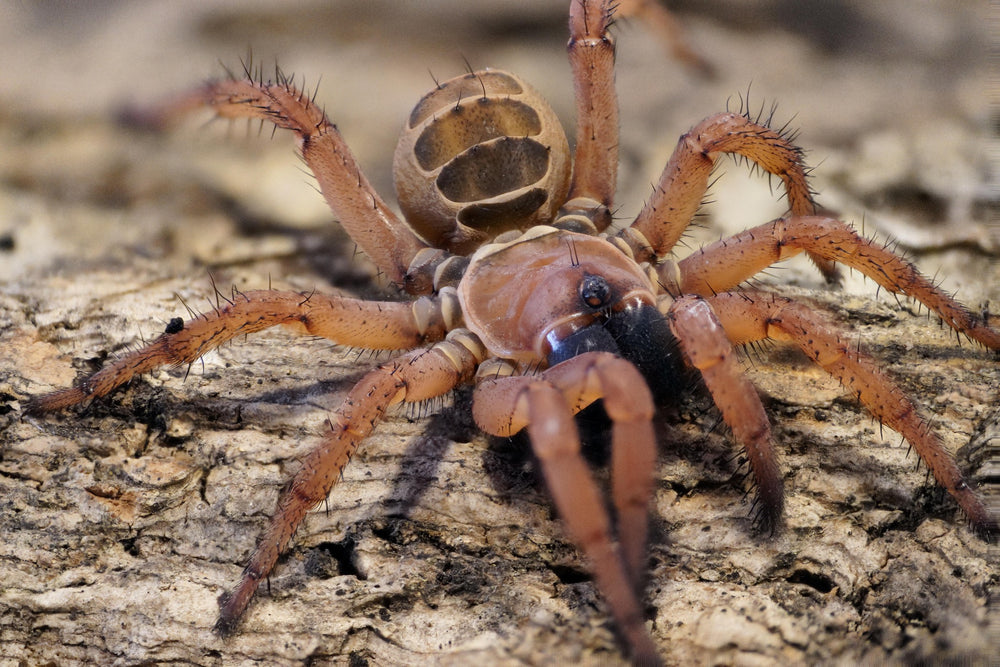
Anthropomorphism and Invertebrate Emotion

What is anthropomorphism? Simply put, it is the tendency to assign human traits, emotions, intentions, or characteristics to other animals—or even to inanimate objects.
As a newer hobbyist, I would watch my tarantulas' behavior with pure fascination. Their movements and body positions seemed to demand some kind of interpretation, fueled by a desire to understand these strange and fascinating creatures.
A cowering posture might lead me to conclude that a spider is afraid or irritated. Walking along the walls of its enclosure might suggest that it is unhappy with its surroundings. A tarantula striking at a stream of water while I refill its water dish might even be interpreted as playful behavior.
But are these observations and interpretations actually accurate?
Or am I simply assigning human qualities to a pet whose nervous system and sensory experience are fundamentally different from my own?
The truth is, we don't yet have a definitive answer. Research into the subjective experiences and emotional capacities of invertebrates—particularly tarantulas—is still limited. We can observe their behavior, measure how they respond to different environments, and identify changes in their behavioral states. But determining what those experiences feel like to the animal is considerably more difficult.
That uncertainty is important. Anthropomorphism can lead us to make assumptions that aren't supported by evidence, but the opposite assumption—that an animal must have no meaningful internal experience simply because it is very different from us—can be equally difficult to justify.
For me, this is what makes observing tarantulas so fascinating. Every behavior invites interpretation, but not every interpretation is necessarily correct. The more we learn about these animals, the more important it becomes to distinguish between what we observe, what we infer, and what we simply want to believe.


